Kimai: Time Tracking for Freelancers and Teams
Kimai is a time tracker built for people who bill by the hour: log time against a customer, project, and activity, then turn those entries into reports and invoices.
Why self-host Kimai
Time tracking data is commercially sensitive, listing your clients, project scope, and effort. Hosted trackers charge per user per month and keep that record on their infrastructure. Kimai runs on your own server with no seat limits and no subscription, which matters most for small agencies and freelancers where per-seat pricing is disproportionate to the value.
What it does
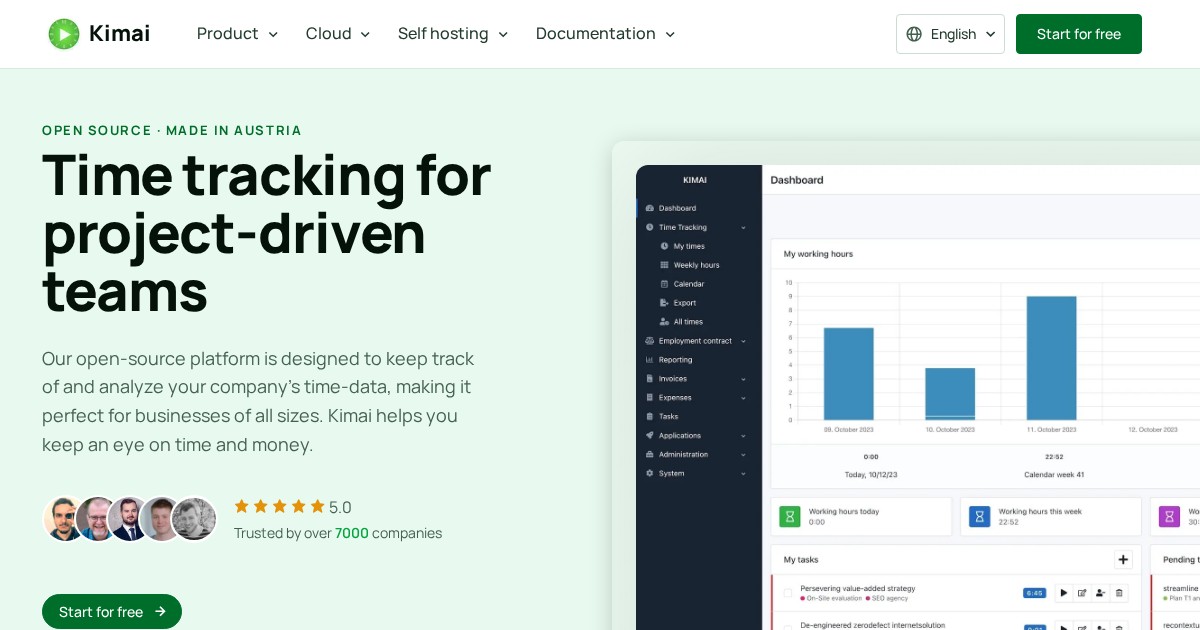
Kimai falls into the Productivity category of self-hosted software. It records time with a start-stop timer or manual entry, organized by customer, project, and activity, with hourly and internal rates, budgets, and fixed-price handling. Reporting covers per-user, per-project, and per-customer breakdowns; invoices generate from tracked time using customizable templates; and exports go to CSV, XLSX, PDF, and HTML. Teams get permissions, approval workflows, and per-user rates, and a REST API plus plugin system cover integrations.
Community traction
Kimai has been developed since 2006 and rewritten on Symfony for its version 2 line, making it one of the longest-running open-source time trackers still in active development.
Deployment
Docker images are published, and it also installs as a standard PHP application with MySQL or MariaDB behind nginx or Apache.
Alternatives
Traggo is a lighter tag-based tracker. Solidtime and TimeTagger cover similar ground with different interfaces. Invoice Ninja overlaps on the invoicing side with time tracking included.
License
Kimai is released under the GNU Affero General Public License v3.0.
Links
Kimai is the practical choice when billing accuracy matters and per-seat pricing does not appeal.