Redmine: The Veteran Open Source Issue Tracker and Project Manager
Redmine has been a staple of self-hosted project management since 2006. It is not flashy, but it is extremely flexible, very stable, and still widely used for issue tracking, internal ticketing, and project management in companies and open source projects alike.
Features
- Multiple projects and sub-projects, each with its own members and modules
- Issue tracking with custom trackers, statuses, fields, and workflows per role
- Gantt charts and a calendar
- Wikis and forums per project
- Time tracking with reports
- Repository browsing for Git, Subversion, and Mercurial, linking commits to issues
- Email integration: create and update issues by email
- A REST API, LDAP authentication, and a large plugin ecosystem
Deployment
Redmine is a Ruby on Rails application that runs on MySQL/MariaDB, PostgreSQL, SQLite, or SQL Server. The simplest route is the official redmine Docker image with a PostgreSQL container, behind a reverse proxy. Distribution packages and Bitnami images are other options.
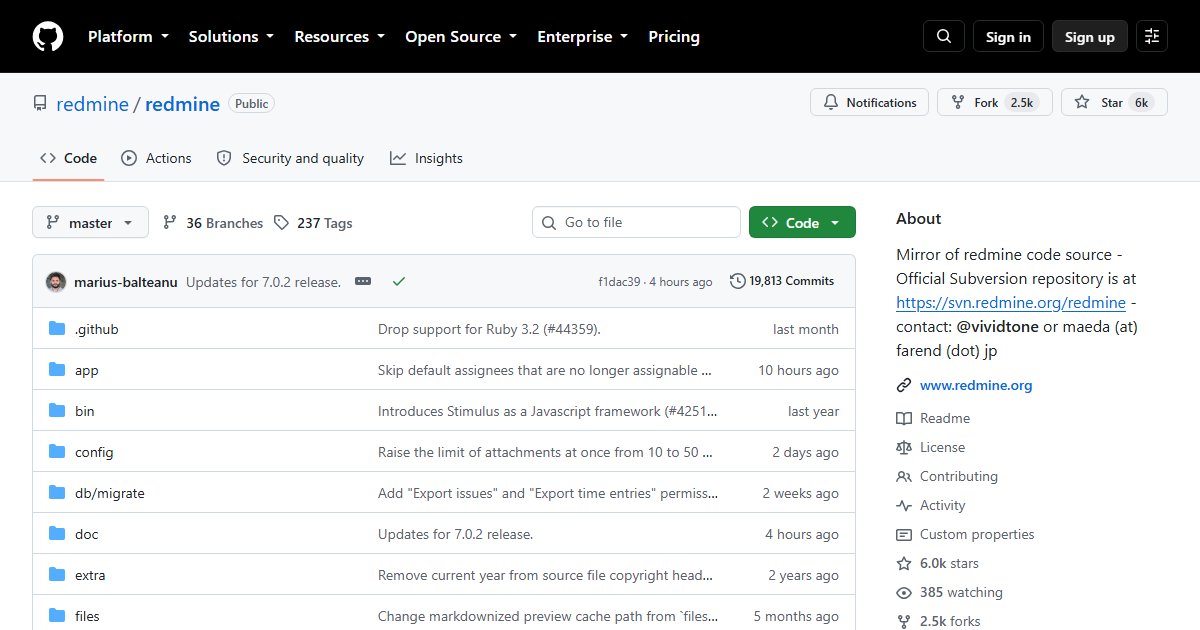
The official source repository is Subversion at svn.redmine.org; the GitHub repository is a mirror.
Strengths and trade-offs
Strengths: decades of stability, very configurable workflows, low resource use, and a huge body of documentation and plugins.
Trade-offs: the interface looks dated, and plugins vary in quality and compatibility between Redmine versions, so check them before upgrading.
Alternatives
OpenProject started as a Redmine fork years ago and has evolved into a more modern, feature-rich platform. Plane offers a modern issue tracker, and Gitea or Forgejo include issue tracking alongside code.
License
GNU General Public License v2.0.