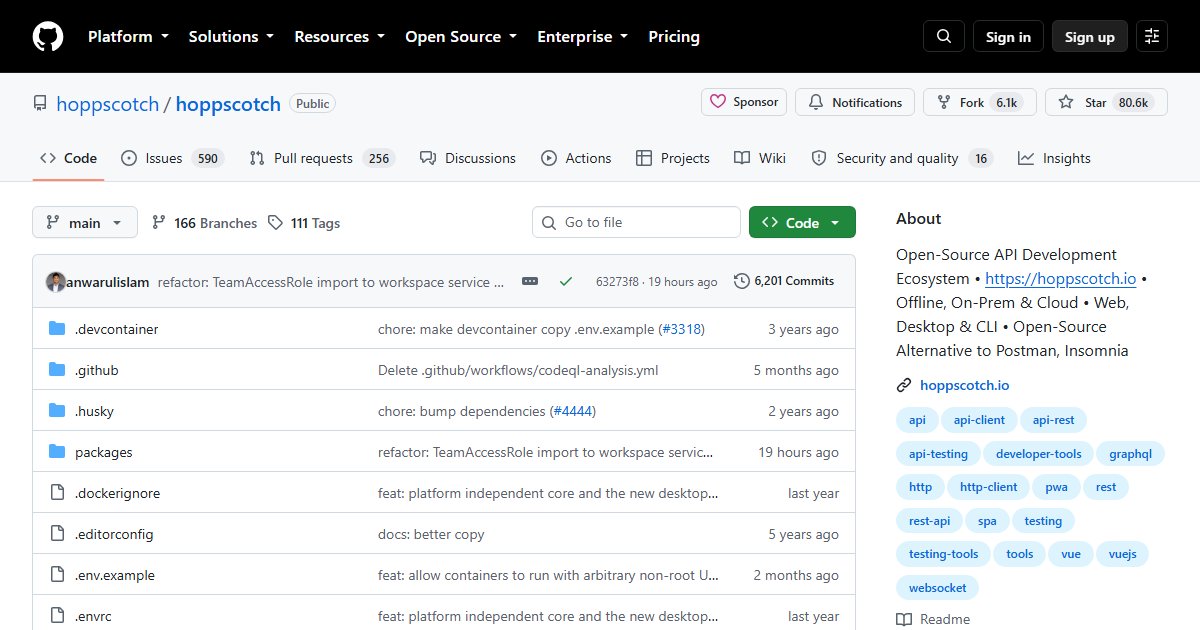
Hoppscotch: An Open Source Postman Alternative You Can Self-Host
Hoppscotch is a tool for testing and developing APIs: build requests, send them, inspect responses, and organise everything into collections, the job Postman and Insomnia do. It is fast, runs in the browser, and can be self-hosted so your team’s collections and credentials stay on your servers.
Features
- REST with all HTTP methods, headers, parameters, and bodies
- GraphQL with schema introspection
- Real-time protocols: WebSocket, Server-Sent Events, Socket.IO, and MQTT
- Collections and environments for organising requests and switching between dev, staging, and production
- Authentication: Basic, Bearer, OAuth 2.0, and OIDC with PKCE
- Pre-request and test scripts in JavaScript
- Team workspaces with shared collections and roles
- Web (installable as a PWA), desktop apps for Linux, macOS, and Windows, and a CLI for running collections in CI
Self-hosting
The self-hosted Community Edition runs from the official Docker all-in-one (AIO) image, with a PostgreSQL database and SMTP or OAuth for sign-in. Enterprise features such as SSO are in a paid edition. Put it behind a reverse proxy with HTTPS.
Why self-host an API client?
Collections often contain API keys, tokens, and internal URLs. Cloud-synced API tools store those on someone else’s servers. Self-hosting Hoppscotch keeps shared collections inside your infrastructure, and the browser-based client means nothing to install for teammates.
For quick one-off requests from a terminal, curl and jq remain unbeatable; see our curl guide and jq guide.
License
MIT.