System76 Releases the Thelio Prime, 48% Smaller Than the Original
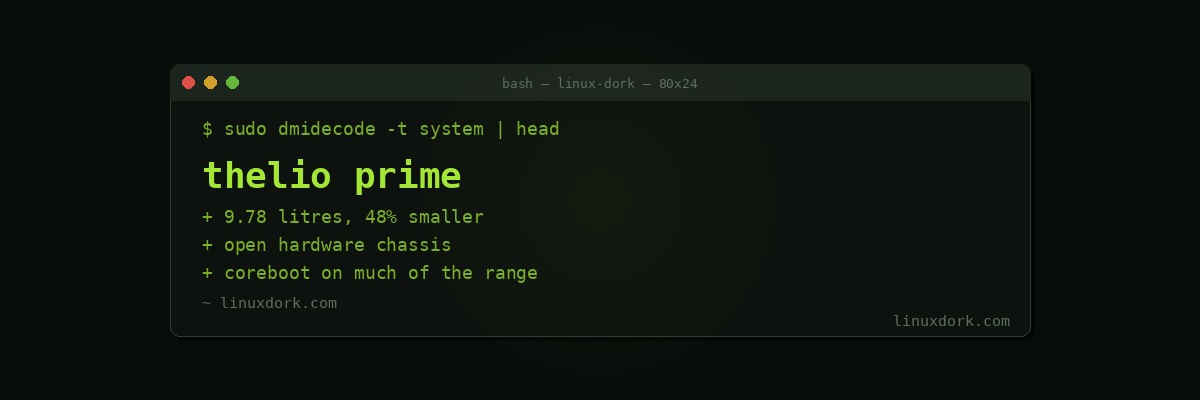
System76 released the Thelio Prime on November 19, a compact desktop with an internal volume of 9.78 litres, which the company describes as 48.5% smaller than the original Thelio.
Why System76’s hardware is worth noting
Plenty of vendors sell computers with Linux preinstalled. System76 does a few things beyond that.
The chassis is open hardware. Thelio’s mechanical design is published, which is unusual for a case design and means the thing is documentable and repairable without reverse engineering.
Open firmware on much of the range. System76 ships coreboot-based firmware on several models rather than a vendor BIOS blob. That is a genuine difference in how much of the machine you can inspect, and it connects to the Libreboot work we covered in October from the other direction.
Upstream driver work. Hardware enablement from System76 goes to the kernel rather than into a vendor patch set, which is the distinction our Debian gaming hardware team report makes about fixing support versus fixing a device.
They build the desktops themselves, in Colorado, rather than rebadging a chassis. The laptops are a different story and are mostly ODM designs, which the company has been straightforward about.
The timing is the interesting part
Launching a desktop into the current market is a decision worth noting, because the DRAM shortage has pushed memory prices up severely and major OEMs have warned of 15 to 20% price increases.
A smaller chassis is partly an answer to that: less material, cheaper to ship, and a market where buyers are more price-sensitive than they were a year ago. It is also where the desktop market has been heading anyway, since a modern mid-range build does not need the volume a 2015 one did.
Valve has gone the other way on the same pressure and stopped taking Steam Machine waitlist placements over memory supply.
The practical question
If you are considering one, the honest framing is that you pay a premium over self-building, and what you get for it is:
- Hardware tested against Linux rather than hoped to work
- Firmware you can inspect on the models that ship coreboot
- Support from people who use Linux, which is not a given
- Money going to a company that upstreams its work
If you are comfortable checking hardware compatibility yourself and happy to debug a wifi chipset, self-building is cheaper and always will be. Our best distros guide covers what to put on either.
System76 also maintains Pop!_OS and the COSMIC desktop, which is now a substantial project in its own right and arguably a larger contribution than the hardware.