Godot 4.7.2 Ships 57 Fixes Across Rendering, Wayland, Multiplayer, and Input
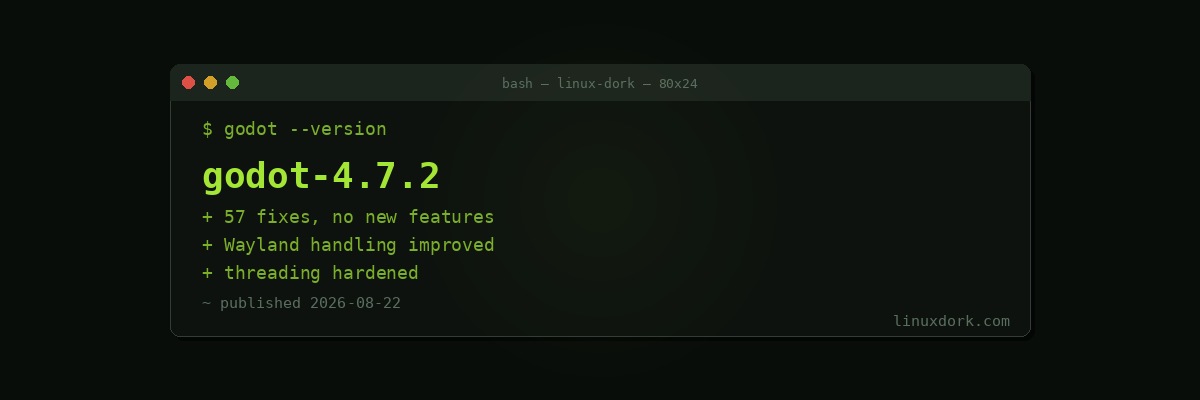
Godot 4.7.2 was released on August 21 as the second maintenance update in the 4.7 series, carrying 57 fixes across the editor, rendering, Wayland, multiplayer, and input handling.
What a maintenance release is for
There is nothing new here, and that is the point. A .2 release exists to make the .0 release safe to depend on, and for a game engine that matters more than in most software: a project that has been in development for eight months cannot easily migrate to a major version, so the quality of the maintenance line determines whether the whole release is usable.
Among the changes are threading hardening and mouse input fixes, both of which are the sort of thing that produces intermittent bugs developers spend days failing to reproduce.
The Wayland fixes
Wayland support is called out specifically, which is worth noting for Linux developers.
Godot has had Wayland support for a while, and it has been the source of a steady stream of issues around window handling, input, and multi-monitor setups. With GNOME having fully dropped X11 and most distributions defaulting to Wayland, XWayland fallback is no longer a comfortable place for a creative application to live.
Every release that improves native Wayland handling makes Godot a more credible choice on a modern Linux desktop.
Upgrading
Maintenance releases within a series are safe to take. Godot’s compatibility promise holds across patch versions, so moving from 4.7.1 to 4.7.2 should not require project changes.
# Flatpak
flatpak update org.godotengine.Godot

# Arch
sudo pacman -Syu godot
Godot remains one of the better stories in open-source creative tooling, in that it is a genuinely competitive engine rather than a free alternative people use reluctantly. Linux support being first-class rather than an afterthought is a large part of why it has the following it does.