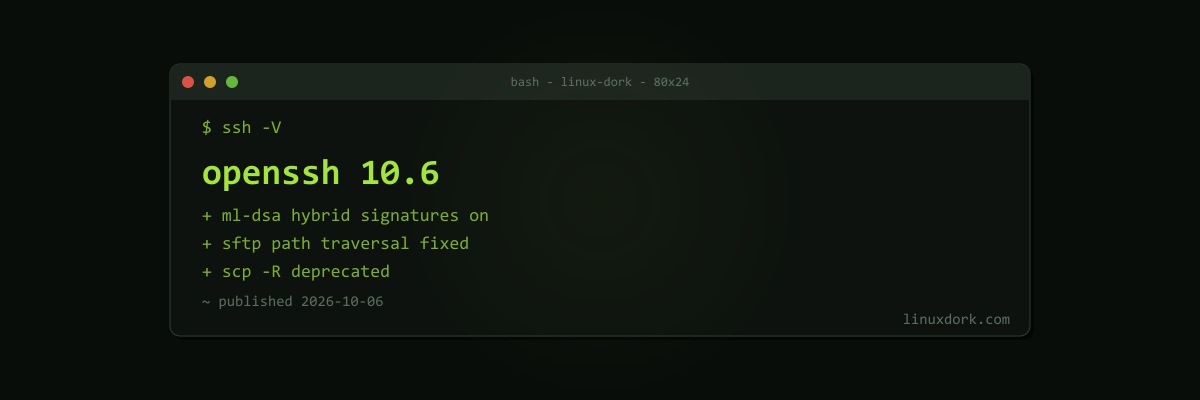
OpenSSH 10.6 Enables ML-DSA Post-Quantum Signatures and Fixes an sftp Path Traversal
OpenSSH 10.6 was released on October 6, two months after OpenSSH 10.5.
Security fixes
- sftp: paths returned by a server are validated more strictly, so a malicious server can no longer steer a recursive download outside the target directory
- Compression: the LZ77 dictionary coder is disabled to mitigate a cross-channel plaintext recovery attack. Compression still works but is less effective
- ssh rejects usernames given on the command line that contain
$or\, preventing shell injection throughProxyCommandandMatch exec - sshd GSSAPI credentials are stored only after successful authentication
- The
restrictkeyword inauthorized_keysnow fully applies to tunnel forwarding ssh-keygenfixes a daylight saving time bug that could make certificate expiry times off by an hour
Post-quantum signatures
The hybrid ssh-mldsa44-ed25519 signature algorithm, which pairs ML-DSA-44 with Ed25519, is now enabled under its final name. Keys made with the earlier experimental @openssh.com variant must be regenerated.
A new WarnWeakCrypto option in sshd_config, on by default, logs when a client connects using key exchange that is not post-quantum safe. Expect new log lines from older clients.
Other new features
AgentSocketPathin sshd andssh-agent -Acontrol where agent sockets livesftpsupportsmkdir -pssh-add -Pskips PIN entry for tokens that do not need it, and FIDO resident keys keep their user-verification requirementTCPKeepAlive allalso applies keepalives to forwarded connectionsssh -Ishows local and remote version strings
Deprecations
scp -R now prints a deprecation warning and will eventually be ignored. Our scp, sftp, and rsync guide covers the alternatives.
Your distribution will ship the fixes in its own OpenSSH packages. The source is on our OpenSSH 10.6 download page, and our SSH hardening guide covers the settings that matter most.