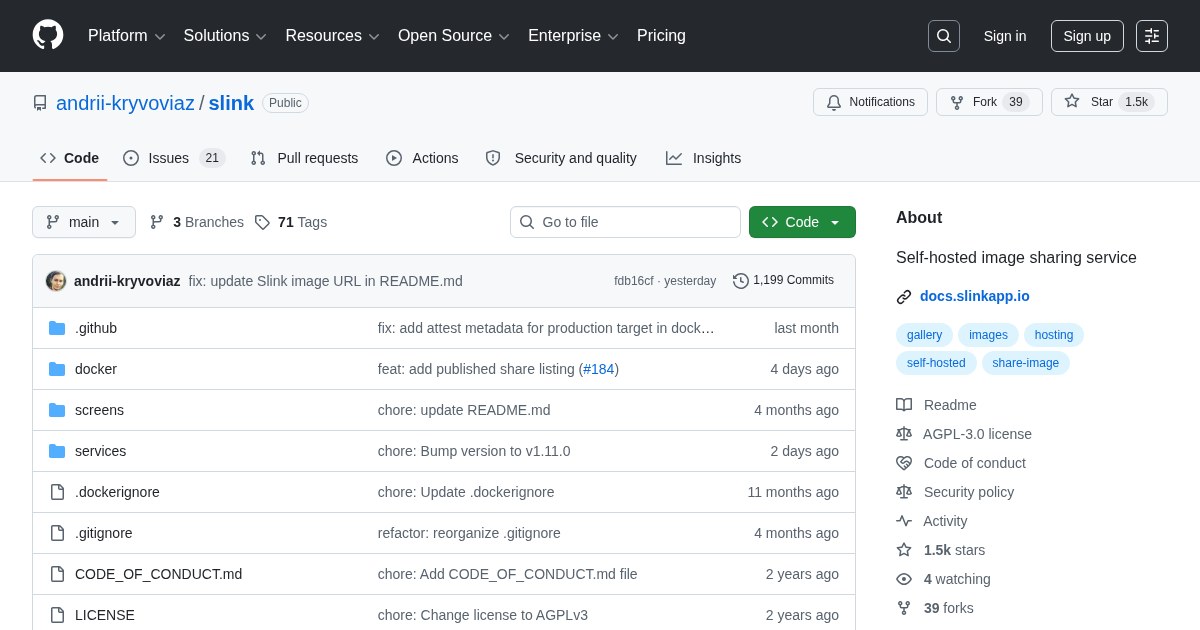
Slink: Self-hosted image sharing platform
Slink is a self-hosted image sharing tool. Self-hosted image sharing platform.
Why self-host Slink
When you deploy Slink yourself, you own the instance. That means no rate limits, no pricing changes, and no worry about the service shutting down.
What it does
Slink falls into the Image Sharing category of self-hosted software. It is designed to be deployed on your own infrastructure, whether that is a home server, a VPS, or a local machine running Docker.
Deployment
Most users run Slink via Docker Compose. The typical setup involves one or two containers and a volume for persistent data.
Alternatives
If Slink does not fit your needs, common alternatives include Imgur. The self-hosted versions of these tools often differ in resource requirements and feature focus, so it is worth testing the one that matches your workload.
Maturity
The current release is 1.1.0. The project has moved past early development and tends to ship stable, documented releases.
License
It is licensed under MIT, making it freely available for personal and commercial use.
Links
If the use case fits, Slink is a solid choice. Most of the complexity is in the initial deploy, and the day-to-day operation is low maintenance.