NZBGet: Efficient Usenet Downloader
NZBGet is a self-hosted download client. A lightweight, high-performance Usenet downloader built to run comfortably on modest hardware.
Why self-host NZBGet
NZBGet’s entire pitch is efficiency: it was written in C++ with a strong focus on low CPU and memory usage, and it remains a common choice specifically for people running a full media automation stack on constrained hardware like a Raspberry Pi or a low-power NAS, where SABnzbd’s heavier footprint is more noticeable.
What it does
NZBGet falls into the Usenet Downloader category of self-hosted software. Like SABnzbd, it downloads NZB-referenced content from Usenet, verifies and repairs it with par2, and extracts archives automatically, exposing an API the *arr stack can queue downloads through. Its web interface is intentionally leaner than SABnzbd’s, trading some visual polish for speed and a smaller resource footprint.
Community traction
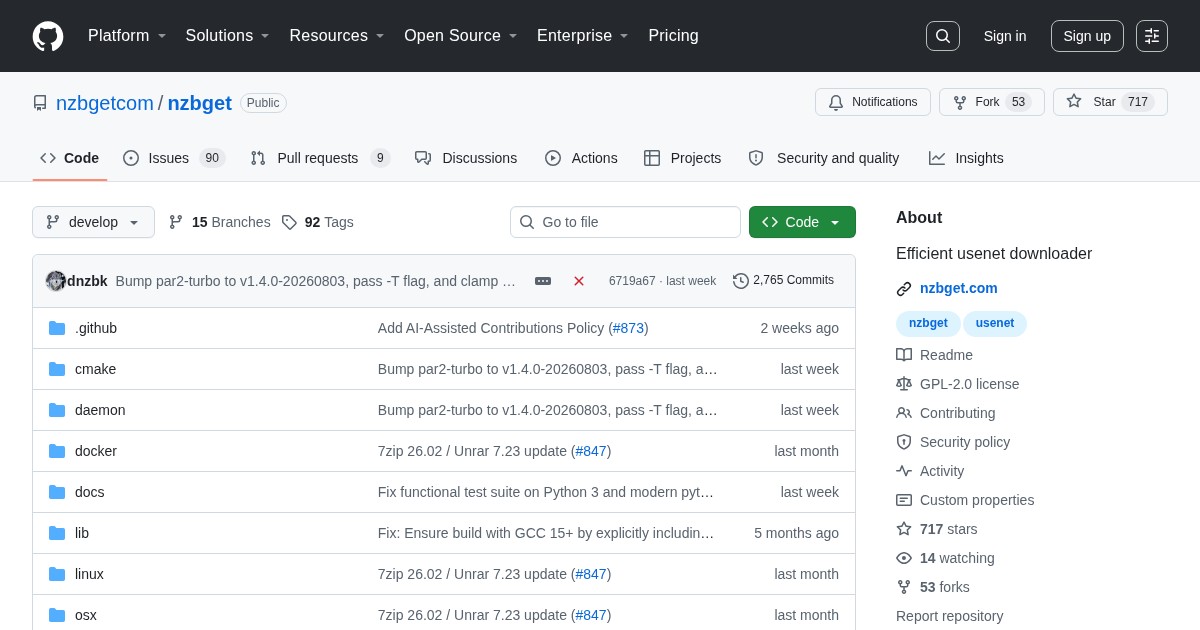
The actively maintained community continuation, hosted at nzbgetcom, has around 670 stars on GitHub and was picked up specifically to keep the project alive and maintained after the original maintainer stepped back, a detail worth knowing since older tutorials sometimes point to the original, now largely inactive repository instead.
Deployment
Docker is the standard path, with the linuxserver/nzbget image being a common choice, following the same shared-downloads-volume pattern used by the rest of a typical *arr-stack compose setup.
Alternatives
If NZBGet does not fit your needs, SABnzbd is the main alternative, offering a more polished web UI and a larger plugin ecosystem at the cost of a heavier resource footprint.
Maturity
The current release is v26.0, from the actively maintained nzbgetcom continuation. The core functionality has been stable for years; recent development has focused on incremental improvements like better status reporting and compressed NZB archive support.
License
It is licensed under GPL-2.0, making it freely available for personal and commercial use.
Links
NZBGet is worth a look specifically if you are running Usenet automation on lower-powered hardware where every bit of CPU and memory overhead matters.