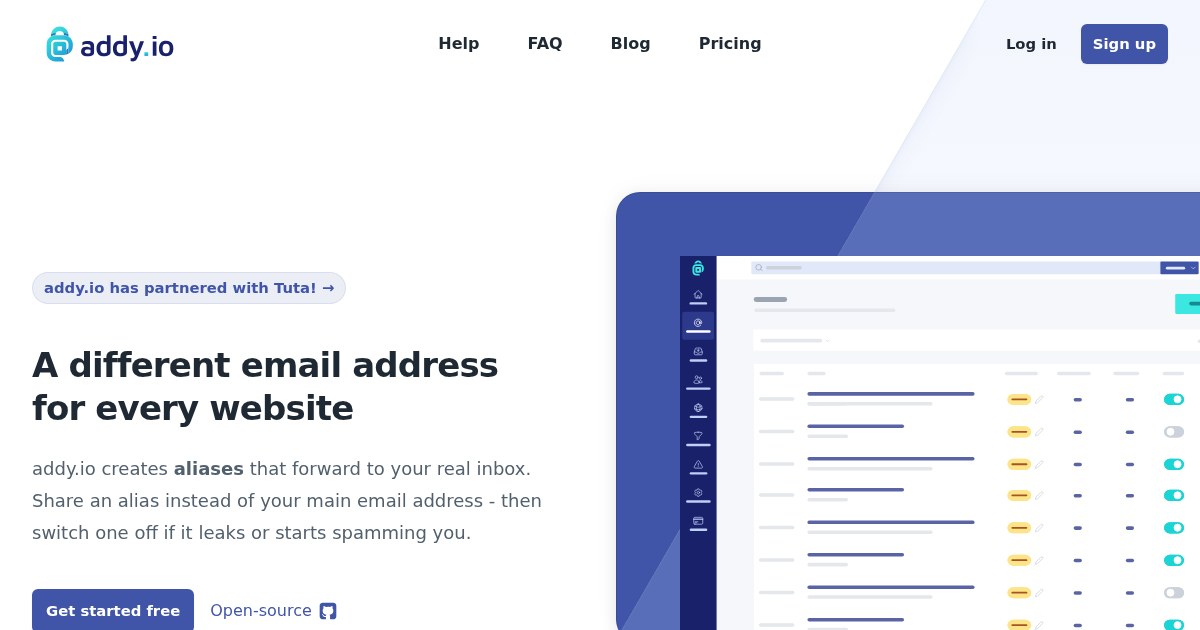
AnonAddy: Anonymous e-mail forwarding
AnonAddy is a self-hosted email and privacy tool. Anonymous e-mail forwarding.
Why self-host AnonAddy
When you deploy AnonAddy yourself, you own the instance. That means no rate limits, no pricing changes, and no worry about the service shutting down.
What it does
AnonAddy falls into the Email, Privacy category of self-hosted software. It is designed to be deployed on your own infrastructure, whether that is a home server, a VPS, or a local machine running Docker.
Community traction
The project has 3k stars on GitHub, which is a reasonable proxy for how widely it is used. Active repositories tend to ship bug fixes faster and have better documentation than projects that stall after the initial release.
Deployment
Docker is the most common deployment path. If you are already running containers at home, adding AnonAddy to a compose file is a low-friction way to try it.
Alternatives
If AnonAddy does not fit your needs, common alternatives include Gmail, Microsoft Outlook. The self-hosted versions of these tools often differ in resource requirements and feature focus, so it is worth testing the one that matches your workload.
Maturity
The current release is 1.2.2. The project has moved past early development and tends to ship stable, documented releases.
License
It is licensed under AGPL-3.0, making it freely available for personal and commercial use.
Links
AnonAddy is worth a look if you are building out a homelab or trying to reduce your dependence on hosted services. The setup cost is usually low and the upside is real data ownership.