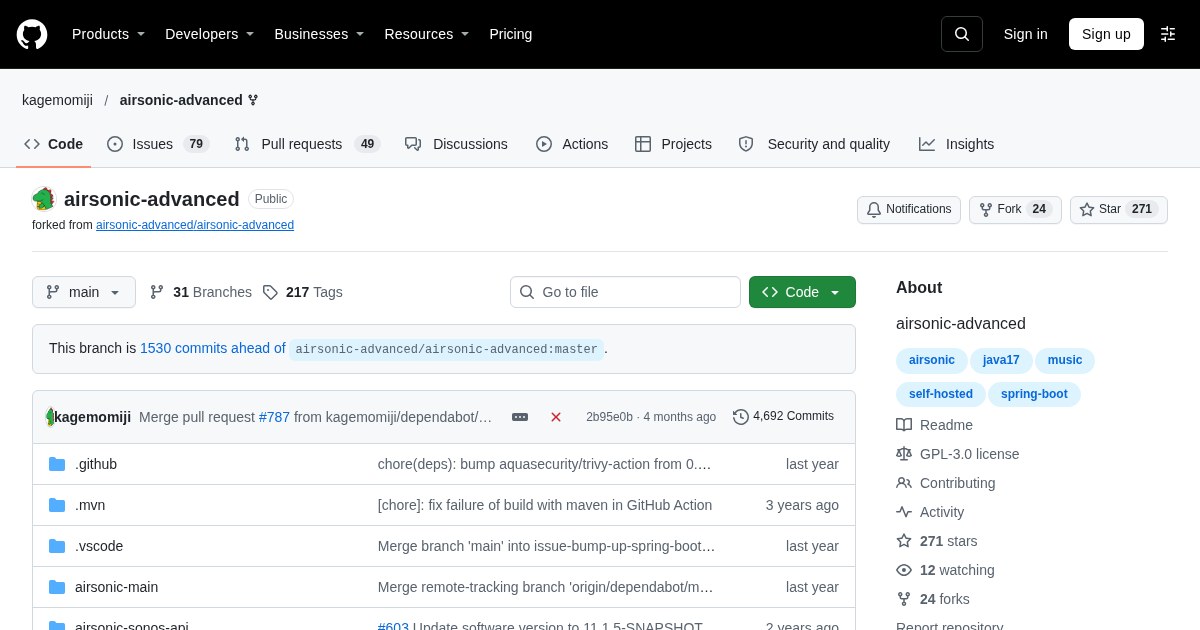
Airsonic Advanced: The Continued Subsonic Fork
Airsonic Advanced is the still-maintained end of the Subsonic lineage, and its value is the API rather than the server.
The lineage, briefly
Subsonic went closed-source. Airsonic forked it. Airsonic development slowed, and Airsonic Advanced forked again with modernisation work.
That history is worth knowing because the ecosystem is the asset: because all of them implement the Subsonic API, a large collection of third-party clients works against any of them.
The Subsonic API is the point
Symfonium, Supersonic, Feishin, play:Sub, Amperfy and others all speak it.
So choosing a server in this family is really choosing which implementation serves an API your preferred client already supports. That portability is unusual and genuinely valuable: changing servers does not mean changing clients.
Airsonic Advanced or Navidrome
The practical question for anyone starting now.
Navidrome is Go, a single small binary, fast, actively developed, and the default recommendation. For most people it is the better choice.
Airsonic Advanced is Java with a servlet container, heavier, and retains features Navidrome deliberately omits: podcast support, transcoding configuration, Jukebox mode for playing on the server’s own audio output, and multi-user controls that some setups rely on.
If one of those specific features matters, Airsonic Advanced. Otherwise Navidrome, and Funkwhale if federation is interesting.
Operational notes
A JVM application, so plan for several hundred megabytes of heap rather than the tens of megabytes Navidrome uses. That is the main cost, and it matters more given current memory prices.
Transcoding uses FFmpeg, and what it can transcode depends on how your FFmpeg was built rather than on the server, which our ffmpeg explainer covers.
Operational caution
Library scanning is I/O heavy on a large collection, and the initial scan on a spinning disk takes a long time. Our I/O schedulers guide and iostat guide cover watching it.
Put it behind a reverse proxy with TLS; Subsonic API authentication has historically been weak and should not cross a network in clear text.
License
Airsonic Advanced is released under the GNU General Public License v3.