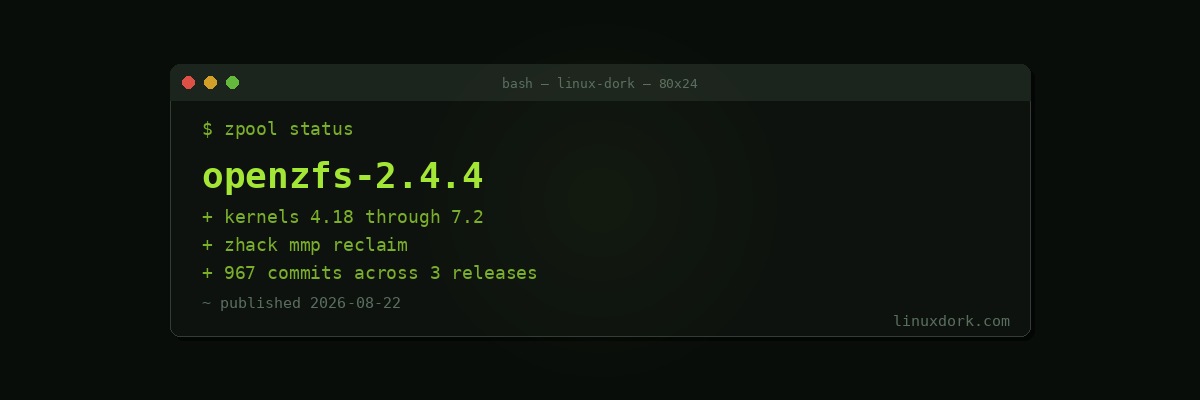
OpenZFS 2.4.4 Adds Linux 7.2 Support and a Recovery Path for Pools Stranded by MMP
OpenZFS 2.4.4 landed on August 21 alongside maintenance releases 2.3.9 and 2.2.11, together pulling in 967 commits. The headline for most people is straightforward: the officially supported Linux kernel range now runs from 4.18 through 7.2.
Why kernel support is the headline
ZFS on Linux lives permanently one step behind the kernel, and the reason is licensing. The CDDL and GPL are incompatible enough that ZFS cannot be merged into the kernel tree, so it ships as an out-of-tree module that has to be updated whenever the kernel changes an internal API.
The practical consequence is the one every ZFS user has hit: you update your kernel, the module fails to build, and your pool does not import on the next boot. With Linux 7.2 now shipping and distributions moving to it, having official support is what makes that upgrade safe.
# Check module and pool status before rebooting into a new kernel
modinfo zfs | grep ^version
zpool status
The general advice stands regardless of version: on a ZFS root system, do not reboot into a new kernel without confirming the module built.
The MMP recovery tool
The new zhack mmp reclaim command recovers a pool left stranded by Multi-Modifier Protection.
MMP exists to prevent the worst thing that can happen to a pool: two hosts importing it simultaneously and corrupting it. It works by writing periodic uberblock updates so another host can tell the pool is in use. The failure mode is that a pool can end up looking active when nothing is actually using it, typically after a host dies uncleanly, and refuse to import.
The 2.4.4 changes also let OpenZFS better distinguish between a failed uberblock claim and genuine activity from another host, which reduces how often you end up in that state at all.
If you run ZFS in a cluster or on shared storage, this is the fix to know about.
Dedup table fixes
Several deduplication table issues were addressed: negative time overflows during DDT pruning, multiple pruning bugs, insufficient locking during dedup verification, and incorrect reference-count tagging in the DDT log.
Standard caveat applies. ZFS deduplication remains something most people should not enable, because the memory cost is substantial and the benefit is narrow. These fixes matter for the minority running it deliberately.
Upgrading
# Arch
sudo pacman -Syu zfs-dkms

# Fedora
sudo dnf upgrade zfs

# Debian and Ubuntu
sudo apt update && sudo apt install --only-upgrade zfs-dkms zfsutils-linux
DKMS will rebuild the module against your current kernel. Confirm it succeeded before rebooting. Our ext4, Btrfs, and XFS comparison covers where the in-tree filesystems sit relative to ZFS if you are still choosing.